Earth Day 2026 is a reminder that the spaces we design don’t just impact how we work, they also impact the environment around us. For businesses, office design is no longer just about aesthetics or efficiency. It’s about making smarter, more sustainable decisions that reduce waste, improve longevity, and adapt to change over time.
The good news? Creating a more sustainable workplace doesn’t require a complete overhaul. With the right approach, thoughtful office design ideas can help businesses minimize their environmental footprint while building spaces that perform better long-term.
What Makes Office Design Sustainable?
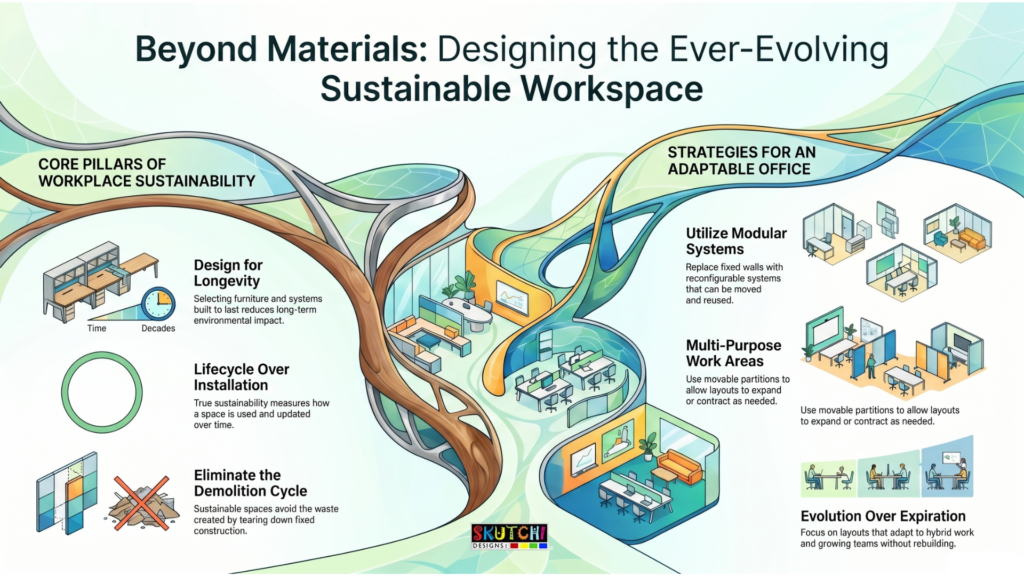
Sustainable office design goes beyond choosing eco-friendly materials. While materials matter, true sustainability is about how a space functions over time.
A sustainable office is designed to:
- Reduce waste during construction and future changes
- Maximize the lifespan of furniture and systems
- Adapt to evolving business needs
- Minimize environmental impact without sacrificing performance
Traditional office builds often rely on fixed construction, which can lead to significant waste whenever a space needs to be updated. Walls are torn down, materials are discarded, and the cycle repeats.
Sustainable design challenges that model by focusing on flexibility, durability, and smarter planning from the start.
Sustainable Office Design Ideas That Go Beyond Materials
When people think of sustainability, they often think of recycled materials, and while that’s important, it’s only one piece of the puzzle.
Here are a few impactful office design ideas that go beyond materials:
- Design for Longevity
Choose systems and furniture that are built to last. The longer a product stays in use, the lower its environmental impact over time.
- Reduce the Need for Demolition
Avoid designs that require frequent teardown. Every renovation creates waste — sustainable spaces are designed to evolve instead.
- Use Reconfigurable Systems
Modular components like demountable wall systems allow you to adjust layouts without replacing materials, significantly reducing waste.
- Think Lifecycle, Not Just Installation
The true environmental cost of a space includes how often it needs to be updated, replaced, or rebuilt. By shifting the focus from “what it’s made of” to “how it’s used over time,” businesses can make a much bigger impact.
How Modular Office Systems Improve Office Design
One of the most effective ways to create a sustainable workplace is by incorporating modular office systems.
Unlike traditional construction, modular systems are designed to be reconfigured, relocated, and reused. Instead of tearing down walls when your office needs change, you can simply adjust the layout.
This approach offers several sustainability benefits:
- Less construction waste during renovations
- Reduced need for new materials
- Lower labor and resource usage over time
- Longer product lifecycle
For growing or evolving businesses, this flexibility is critical. It allows spaces to adapt without starting from scratch, which is a key factor in reducing environmental impact.
Flexible Office Design Ideas for Changing Workspaces
Workspaces today are constantly evolving. Hybrid work, growing teams, and shifting priorities mean that static office layouts quickly become outdated.
Flexible office design helps solve this problem while supporting sustainability.
Some effective strategies include:
- Creating multi-purpose work areas
- Using movable partitions instead of fixed walls
- Designing layouts that can expand or contract as needed
- Incorporating systems that can be easily reconfigured
Flexibility doesn’t just improve usability — it directly reduces waste by eliminating the need for frequent rebuilds.
Earth Day Office Design Tips for Businesses
Earth Day is the perfect opportunity to rethink how your workplace is designed and used. Even small changes can make a meaningful difference over time.
Here are a few practical ways to get started:
- Evaluate how often your space is updated or renovated
- Look for opportunities to replace fixed elements with flexible systems
- Choose solutions that are built for long-term use
- Prioritize designs that can adapt as your business grows
- Consider both environmental impact and lifecycle cost
Sustainability isn’t about one decision — it’s about a series of smarter choices that add up over time.
Designing Workspaces That Evolve, Not Expire
The future of office design isn’t just sustainable, it’s adaptable.
By focusing on longevity, flexibility, and smarter systems, businesses can create workspaces that not only look great today but continue to perform for years to come. Instead of constantly rebuilding, the goal is to design environments that evolve alongside your needs.
Designing a smarter, more sustainable office starts with the right plan. Schedule a free office design consultation to explore solutions that reduce waste, improve flexibility, and evolve with your business.
This Earth Day, it’s worth asking a simple question: Is your office designed to last, or designed to be replaced?